When The Holidays Bring Grief and Celebration
By Kelsey Eisenberg, CSW
My mother’s favorite prayer is the Shehecheyanu. It’s sung on the first night of Hanukkah as an expression of gratitude for being carried to greet this season. My mother has woken up ill or in pain most mornings since 1998, and yet she beams when she sings it. Baruch atah, Adonai Eloheinu, Melech haolam, shehecheyanu, v'kiy'manu, v'higiyanu laz'man hazeh.
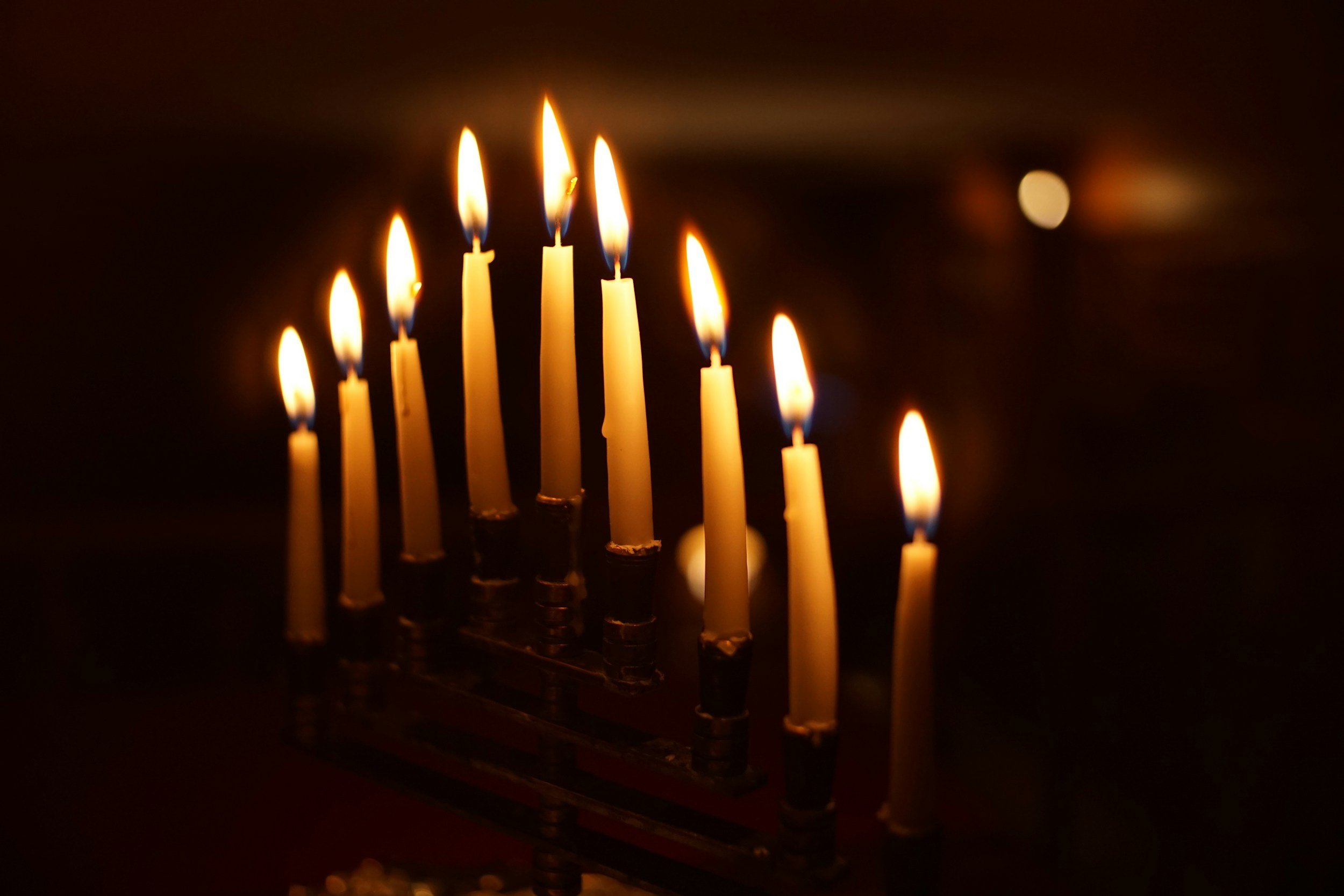
When I slow down enough, I find that prayer’s melody lurking in my diaphragm throughout December and January. I am grateful to be alive. And beside the Sehecheyanu, sits grief, whispering the names of those I can no longer touch. Sometimes I examine fragments of my loved ones’ laughter, stored in my bones. Sometimes I let the warmth of their palms press against the insides of my chest until I think my ribs will crack from love. Sometimes I am more attuned to the silence left by their departure; the holidays we won’t celebrate together, and I allow myself to sob into the quiet. The more I experience loss, the more convinced I become that grief is a practice of allowing love to transcend death. So, I tell my grandmother’s jokes, hoping the lines around my eyes crinkle in the same pattern as hers. I pace my home to the rhythm of Nate’s guitar strings. And when I smell cigarette smoke – I think of the pack that Grandpa Tom told me he would let me buy with a tin of quarters in his truck if the cashier would sell them to me under-age.
Other losses have less tangibility – dreams that didn’t come to fruition, choices that were made through avoidance, hopes that were never born. I am grateful for this day, certainly, but sometimes wonder how some other version of me, would be greeting this season. There is a version opening presents with a two-year old. Is she happier with her home fuller? One still dancing in the kitchen with the red-head. How did she avoid the implosion of that partner’s sadness with her own intensity? Another version took the orthodontist’s advice at 14-years-old, left the braces on and doesn’t suffer TMJ. I can dismiss these as stories – what is the point of regret. Shehecheyanu. I was granted this life. But this is dismissive. We are, after all, just stories made flesh.
Of irrevocable choices, Cheryl Strayed wrote,
We want it to be otherwise, but it cannot be: the people we might have been live in a different, phantom life than the people we are…I’ll never know and neither will you of the life you don’t choose. We’ll only know that whatever that sister life was, it was important and beautiful and not ours. It was the ghost ship that didn't carry us. There’s nothing to do but salute it from the shore.
I, like Cheryl, am so frequently asked, “what do I do?” I still haven’t learned to answer that question satisfactorily. To stand on the shore is to surrender to the grief of uncertainty, and the pain that usually attends it. To salute the one we aren’t or the ones we cannot touch is not to dismiss but to honor the distance. All of our choices, in some way, are irrevocable; small deaths. Each brought us to this moment, where we again get to choose to love and to grieve in this, the only life, we have been given.